

The Nocturnal Economy of Sniffies
Field Notes From Mexico City
CHRONICLES | MARCH 13th, 2026
7 MIN READ | WORDS by Jona Montoya
I was leaving TOM’S the other night—after satisfying what I can only classify as a very specific hunger—when I experienced a familiar feeling: the vague sense that the night was… unfinished.
You drink too much, you want water. You eat a three-course meal, and suddenly you’re hungry again—just for something else.
That is typically when I open Sniffies.
Not during events. After.
I wait for the city to loosen. Better after eleven—midnight, if possible—when walking a few hundred metres feels less like effort and more like drift.
You open the map, and the city flickers to life.
Someone is 300 metres away.
Someone else is in your building.
Someone is already moving.
It feels almost embarrassingly efficient—unlike Grindr.
Sniffies doesn’t ask who you are.
It asks what you want.
And more importantly—how soon.
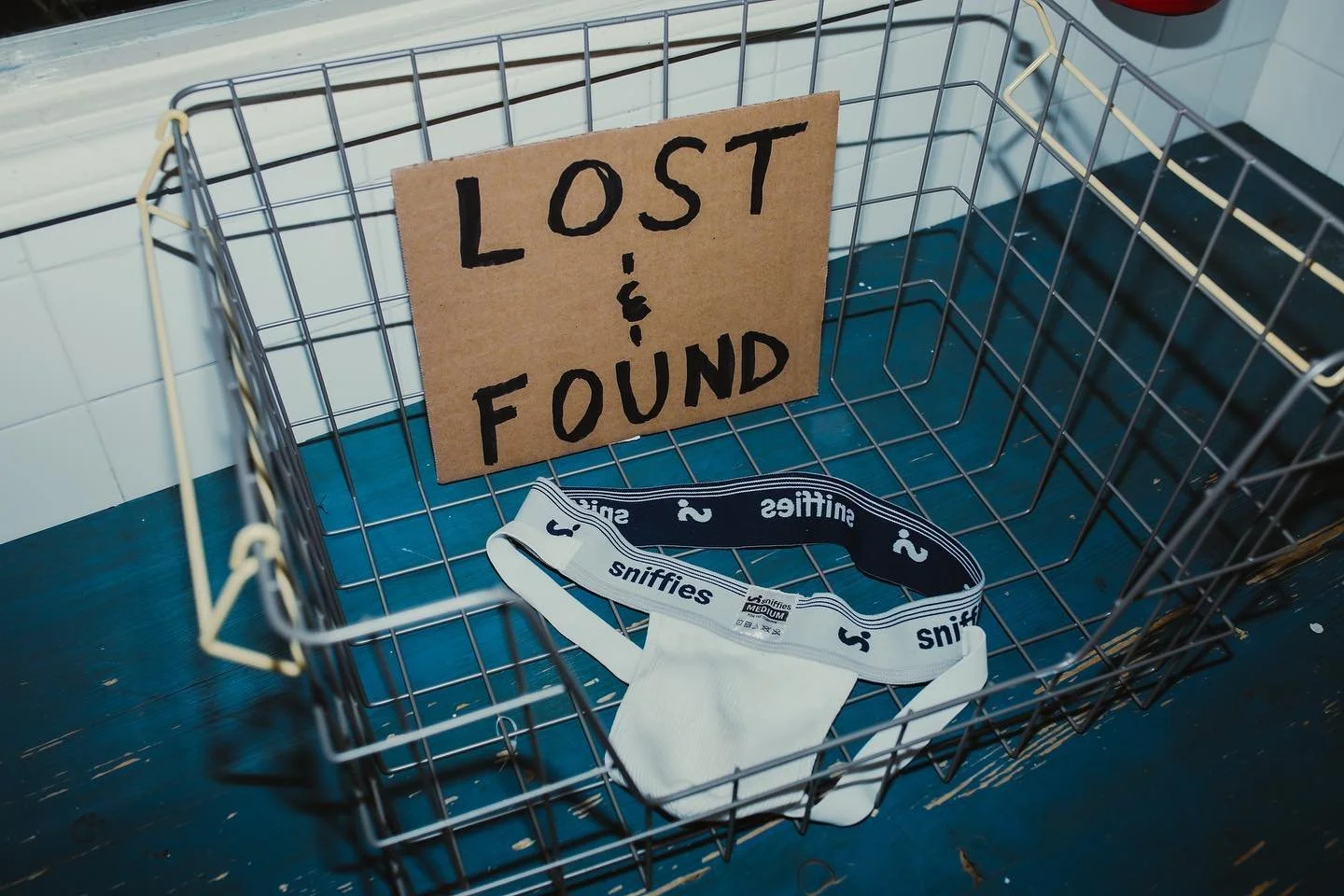
Photo: Sniffies, Facebook
I
A decade ago, an active sex life in Mexico City required coordination.
You planned it. Negotiated it. Dressed for it. There were codes, slow recognitions. Desire moved like traffic on Insurgentes Avenue—dense, frustrating, occasionally worth it.
Now it runs on acceleration.
A message.
A location.
A decision.
Ten minutes later, you’re standing on a street you’ve walked a hundred times before, but it feels slightly tilted.
You don’t open Sniffies because you’re looking for love.
You open it because you want something to happen.
Just yesterday, I crossed an entire neighbourhood for someone whose name I never asked. Shoes off. No names. No eye contact longer than necessary.
I left before my eyes adjusted to the lighting, before my body had fully caught up with what had happened.
At some point, I caught my reflection in a dark window—half-dressed—and didn’t recognise myself immediately. Elevator mirrors are unforgiving like that.
Personality has become irrelevant.
We deal strictly in appetite.
That honesty is disarming.
I have no patience for narrative—and I’m a writer.
II
Of course, there is a darker edge.
Anonymity is a solvent. It dissolves inhibition—and, occasionally, consequence.
Maybe you’ve been there—watching conversations disappear mid-sentence, as if the person on the other end simply ceased to exist.
Standing outside buildings, refreshing a chat that never updates.
Maybe you’ve been blocked while you were already on their street.
Maybe it was me—the one who blocked you.
No closure. Just absence.
I’ve also stood outside buildings where the entrance light was broken, rereading the last message, trying to extract certainty from tone.
Halfway up, you start asking yourself questions you should have asked earlier.
There is a casualness to disappearance that would feel pathological anywhere else, but here feels inevitable.
You learn not to take it personally.
Or at least, you tell yourself you don’t.
At times, it feels like watching animals at a watering hole. No one is pretending to be anything other than what they are in that moment: hungry, thirsty, cautious, reckless.
It is, effectively, a nocturnal economy.
Even during the day.
III
I don’t remember every encounter. They blur.
But I remember the bad nights.
And especially the ones where—after a few messages and a short walk—I’m standing outside a building, looking up, thinking: something about this feels off.
A dark staircase.
A message that shifts tone once you’re close.
Nothing I can immediately explain. Just a hunch.
Once, I made it to the door.
Stopped.
Listened.
Nothing.
Not silence—just the absence of anything I could place.
A chill down my spine.
I stood there long enough for it to become a decision.
And then I left.
No message. No explanation. Just my footsteps going back down the stairs, louder than they should have been.
IV
I’ve been cruising since I was 15. I’ve learned to pay attention to that hunch.
Because the risk is real.
You’re moving through a system built on partial information. Proximity without context. Intention without verification.
So you compensate.
You read patterns.
You listen for what isn’t being said.
You notice when something doesn’t hold.
It’s a kind of intelligence you don’t talk about, but rely on constantly.
Street smarts, internalised.
Every time I trust that instinct, I surprise myself.
V
Sniffies, for all its bluntness, offers a simple truth:
You can dress it up however you like. Build apps around it. Analyse it. Pretend it’s new.
It isn’t.
Cities have always had their shadows.
And in Mexico City, where men still get beaten for wanting the wrong thing, there is always a moment when you have to decide how much of yourself you’re willing to risk.
I’ve never been particularly good at sitting still inside my own life.
I move. I test. I push.
Sometimes just to confirm that I can still feel something.
That I’m still responsive. Still alert. Still capable of wanting something enough to move towards it without overthinking it to death.
There’s a fine line between feeling alive and putting yourself at risk.
I know where it is.
I just don’t always step back from it. ■










From Our Partners


Join the ConversationMexico is changing. In recent years, a growing number of gay men—particularly from the United States—have begun arriving with more than a holiday in mind. Some relocate, others linger. Drawn by culture, cost, climate, or cruising fatigue elsewhere, they meet a city in motion, and the encounter leaves marks on both sides. Gays Love México! is a record of a city and a community adjusting to one another, in real time. Through interviews and reported conversation, we examine how gay men actually live, work, love and spent their time here. To join the conversation, subscribe to the newsletter. You’ll receive occasional invitations to share your stories or respond to our questionnaires on gay culture, love, sex—and life in Mexico.
Submit a StoryDo you have a story you’ve never quite known where to put? The date that went off the rails. The job that humiliated you in ways HR never could. A friendship that imploded. A power dynamic you only understood once you were already under the boot. Nothing sensational—just clear, first-person accounts of how adults collide. Send it in. We’ll publish it in our upcoming column, HELL IS OTHER PEOPLE. Please note: We’ll edit your story for clarity and tone. All submissions are published anonymously. Names, workplaces, cities, and identifying details must be altered or removed. If a story still risks identifying a private individual, we’ll edit further—or decline it. All selected pieces will appear on this site over the coming weeks.
PartnershipsThis site runs on a short list of ads we actually believe belong here—things that make sense for our readership and don’t get in the way of the story.
Brands and partners wishing to engage with our audience may request the current Advertising Menu at hola@gayslovemexico.com.
Our Recommendations

Premier Mexican traditional cooking experience in CDMX.
Contemporary art gallery specializing in photography. Roma Norte.

Pilates reframed as a focused, multi-sensory practice. Roma Norte.