

JANUARY 26, 2026 | 4 MIN READ
When in Polanco...Casa Ofelia: Not a hotel for people who want to be impressed. This is grown-up comfort, not chest-thumping opulence.
WRITER Jona Montoya

Some hotels shout on arrival, flinging scented candles at your nostrils and demanding admiration for their concept. Casa Ofelia Polanco does none of this. It clears its throat, opens the door, and steps aside.
Which is the most persuasive move a hotel can make.
Set within a carefully restored mid-century house, Casa Ofelia is small — properly small — not ‘boutique’ in the way a luxury conglomerate uses the word to mean slightly fewer rooms but twice the price. It is domestic in scale, edited in temperament, and it feels like a well-run private house, owned by someone who reads better magazines than you do and doesn’t need to prove it.
The rooms are designed for a radical activity hotels often forget to prioritise: sleep. The beds are excellent, dressed in proper cotton linens. The showers indulgent, with rainfall fittings and decent pressure. The lighting flatters both faces and moods. Coffee machines and well-judged amenities are present without squeaking for attention. In some suites, a compact kitchenette reinforces the sense that this is a place to live briefly. It is design as good manners.
Yes, some rooms are compact. So are Parisian apartments, Japanese ryokans, and every place where space is treated as something to be considered rather than conquered. If your definition of luxury requires square meters you can jog in, you may stay at the Presidente. If, however, you value intelligent use of space — storage where you need it, circulation that makes sense, bathrooms that don’t feel like afterthoughts — you’ll feel properly looked after.
The staff are warm and refreshingly un-robotic.
The hotel actively curates local guides to Polanco’s dining rooms, museums and bars, making it clear that the city is the main attraction, not the lobby. On good days, service feels personal and generous. On less polished ones, it can drift into informality — breakfast timing gets fuzzy, someone needs a nudge. This is not Four Seasons choreography. It is hospitality with fingerprints on it. Decide which you prefer.
Location-wise, Casa Ofelia plays a clever hand. Polanco can be a peacock — glossy, loud, desperate to remind you how expensive it is. Casa Ofelia tucks itself just far enough away from the strut. You are near everything when you want it, and insulated from it when you do not. Museums, dining, walking — all easy. Noise, chaos, and flex culture — largely absent.
Breakfast exists. You will survive it. Then you will sensibly go elsewhere. That said, the hotel offers options rather than obligations: mornings can be taken downstairs at Niddo Café, or via a quieter in-house alternative, with in-room service available for those who prefer discretion over ritual. Upstairs, the rooftop offers a modest exhale — a place to sit, think, and remember why you came to Mexico City in the first place, which was presumably not to admire a broom cupboard rebranded as a gym.
There is no sprawling spa. Wellness, such as it is, comes quietly: in-room treatments and private sessions arranged on request. The house is adult-oriented, non pet-friendly, non-smoking, and uninterested in foot traffic. Casa Ofelia is not here to distract you. It is here to support you while you live your actual life in the city.
Final verdict: this is grown-up comfort, not chest-thumping opulence. Not a hotel for people who want to be impressed. Casa Ofelia trusts you have taste. It does not perform, posture, or plead for attention, because letting Mexico City take over is entirely the point. ■


Jona Montoya Loves México22 QUESTIONS | JANUARY 12, 2026
“Pleasure is not something you apologize for.”
A reflective interview on sex, self-control, living well in Mexico City and the pleasures that survive once you stop trying to outrun yourself.
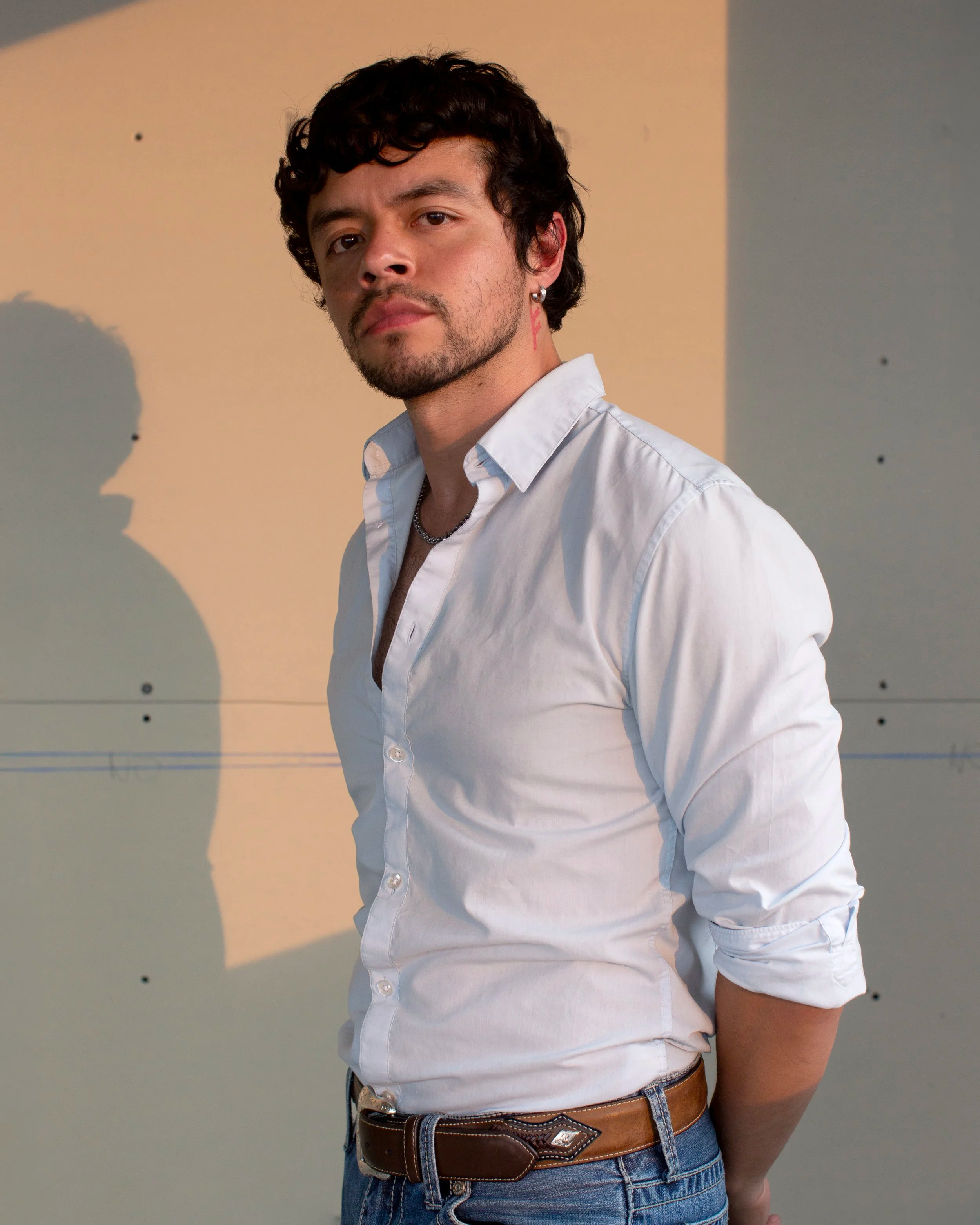
Jona Montoya, Copywriter.
Your favorite pornstar — first name that comes to mind. Hmmm… Kayden Gray. What turns you off? Sexual-stinginess a.k.a fucking someone who never seems curious about what you like, never adapts, never checks in, never reciprocates. That’s the ultimate boner-killer. Something you tried once and would not repeat. Walking around the world. I quit nine months and 2,000 miles in—broke, homeless, and with serious back-pain. I learned exhaustion is not enlightenment. Which work by a gay artist would you want at home, and why? Paul Cadmus’s Y.M.C.A. Locker Room. — My dream is to own a bathhouse, and this is the painting I’d hang at the entrance, as a reminder that desire has always been communal, awkward, physical, and a little messy. What is your happiest memory? An LSD trip, back in 2022. My brain peeled itself open. I remember it now as my happiest memory because once you’ve seen “that”, what lingers afterward is a sort of clarity words can’t fully describe. What are you actually looking for right now? God, in everything and everyone. What is considered normal in Mexico that outsiders consistently misunderstand? Time bends here because people come first. Family, friendship and faith, not machines. The gag is: I’m always on time. I blame my mother for that. What do you now know about Mexico that guidebooks never bothered to mention? Mexico City runs on overlapping rhythms. If you’re rushing, you’re already out of sync. What quietly excellent thing have most visitors missed entirely? For the most part Mexicans shrug at your life story and that shrug is a form of grace. Almost no one here wants to police your desire, your identity, your sex life, your relationship structure, your eccentricities. Visitors miss it because they’re too busy projecting their own self-importance and drama onto a place that has already seen everything. What daily ritual anchors you when you’re far from home? Blasting rock and heavy metal through my headphones. Where is home for you now—and where do you go when you don’t want to be seen, but don’t want to be alone? Home is the bed I share with my boyfriend in Mexico City. I go there. When have you behaved badly abroad—and what did you learn from it? I’ve behaved badly everywhere I’ve gone. I take advantage of anonymity, bend agreements, internal and external, and assume I’ll deal with the consequences later. I’m alive less because I’m careful than because I’m fortunate. Luck is a terrible thing to build a life on. What pleasure do you defend without apology? Oh, several… Privacy. Changing your mind. Boundaries that disappoint people. Sex with someone you don’t particularly like. If no one is being lied to, coerced, or misled, pleasure is not something you apologise for. What fantasy of yours should stay a fantasy? That more still equals better. It isn't. Monogamy is now the risk worth taking. What boundary did you learn to enforce in Mexico—and why? Leaving while the night is still good. In Mexico, hospitality is generous to the point of endurance. It’s a culture that gives and gives, and knowing when to stop receiving is not ingratitude. It’s self-respect. What do you want more of in bed—and what are you doing about it? Hours of sleep and sex that matches the man I am now. I say what I want, plainly, and I listen when the answer isn’t yes. Asking reveals appetite. Silence gets you nothing. What is the most adult decision you’ve ever made? Wanting less, on purpose. One lover, fewer opinions, fewer exits. Better quality of everything. What has Mexico given you that you didn’t ask for? Street smarts. And a tolerance for closeness. What has it taken from you that you no longer needed? Fear. Mostly the unnecessary kind. What should newcomers learn quickly—or suffer for ignoring it? Ahorita is not a time. It can mean in five minutes, in an hour, later today, tomorrow, or in a future so abstract it has no measurable relationship to your lifespan. If it matters, insist gently on a time—or die waiting. If you had to explain Mexico to someone you love, what would you say? Nothing works the way you expect. And almost everything works anyway. Especially people. If this chapter of your life were a footnote, what would it read? Came back to Mexico City expecting repair. Got clarity instead. Learned which fantasies to retire—and when to leave the party with my clothes still on. ■
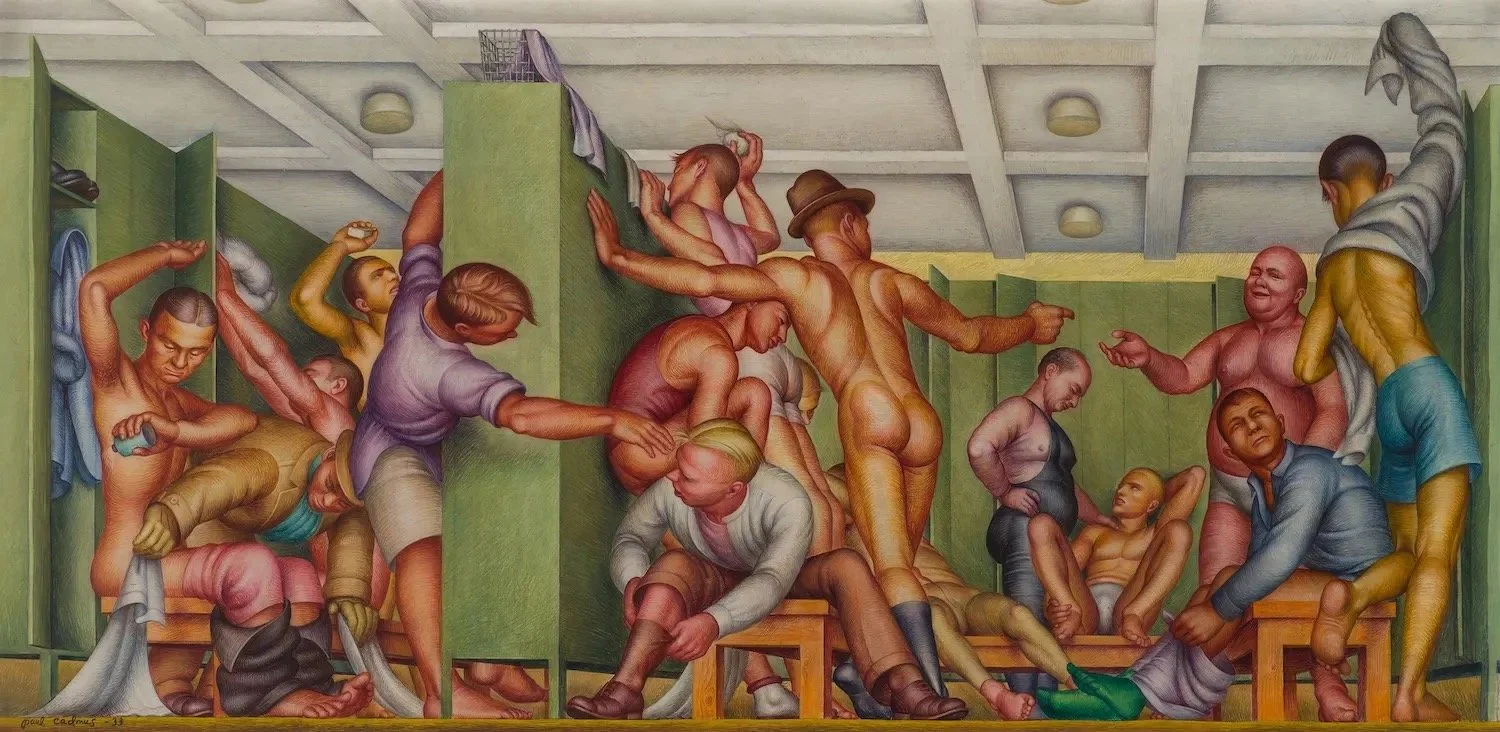
Paul Cadmus, Y.M.C.A. Locker Room, 1934

From Our Partners

Join the ConversationMexico is changing. In recent years, a growing number of gay men—particularly from the United States—have begun arriving with more than a holiday in mind. Some relocate, others linger. Drawn by culture, cost, climate, or cruising fatigue elsewhere, they meet a city in motion, and the encounter leaves marks on both sides. Gays Love México! is a record of a city and a community adjusting to one another, in real time. Through interviews and reported conversation, we examine how gay men actually live, work, love and spent their time here. To join the conversation, subscribe to the newsletter. You’ll receive occasional invitations to share your stories or respond to our questionnaires on gay culture, love, sex—and life in Mexico.
Submit a StoryDo you have a story you’ve never quite known where to put? The date that went off the rails. The job that humiliated you in ways HR never could. A friendship that imploded. A power dynamic you only understood once you were already under the boot. Nothing sensational—just clear, first-person accounts of how adults collide. Send it in. We’ll publish it in our upcoming column, HELL IS OTHER PEOPLE. Please note: We’ll edit your story for clarity and tone. All submissions are published anonymously. Names, workplaces, cities, and identifying details must be altered or removed. If a story still risks identifying a private individual, we’ll edit further—or decline it. All selected pieces will appear on this site over the coming weeks.
PartnershipsThis site runs on a short list of ads we actually believe belong here—things that make sense for our readership and don’t get in the way of the story.
Brands and partners wishing to engage with our audience may request the current Advertising Menu at hola@gayslovemexico.com.
Little Shop of Homos

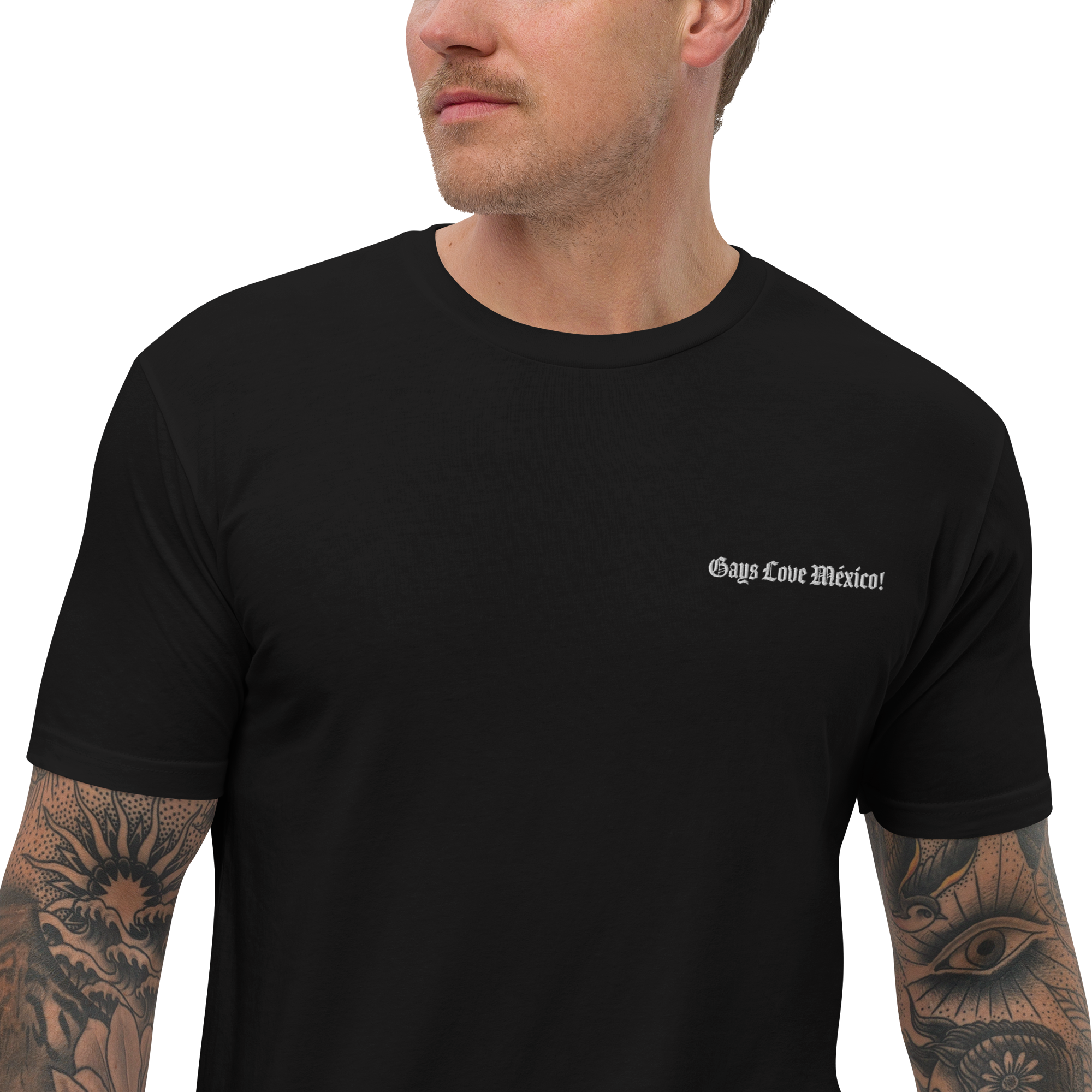
Finished with discreet Gays Love México! embroidery.
• 100% combed ring-spun cotton
• Heather Grey is 90% cotton, 10% polyester
• Fabric weight: 4.3 oz/yd² (145.8 g/m²)
• 32 singles
• Pre-shrunk
• Blank product sourced from Honduras, Nicaragua, Mexico, or Cambodia
This product is made especially for you as soon as you place an order, which is why it takes us a bit longer to deliver it to you. Making products on demand instead of in bulk helps reduce overproduction, so thank you for making thoughtful purchasing decisions!
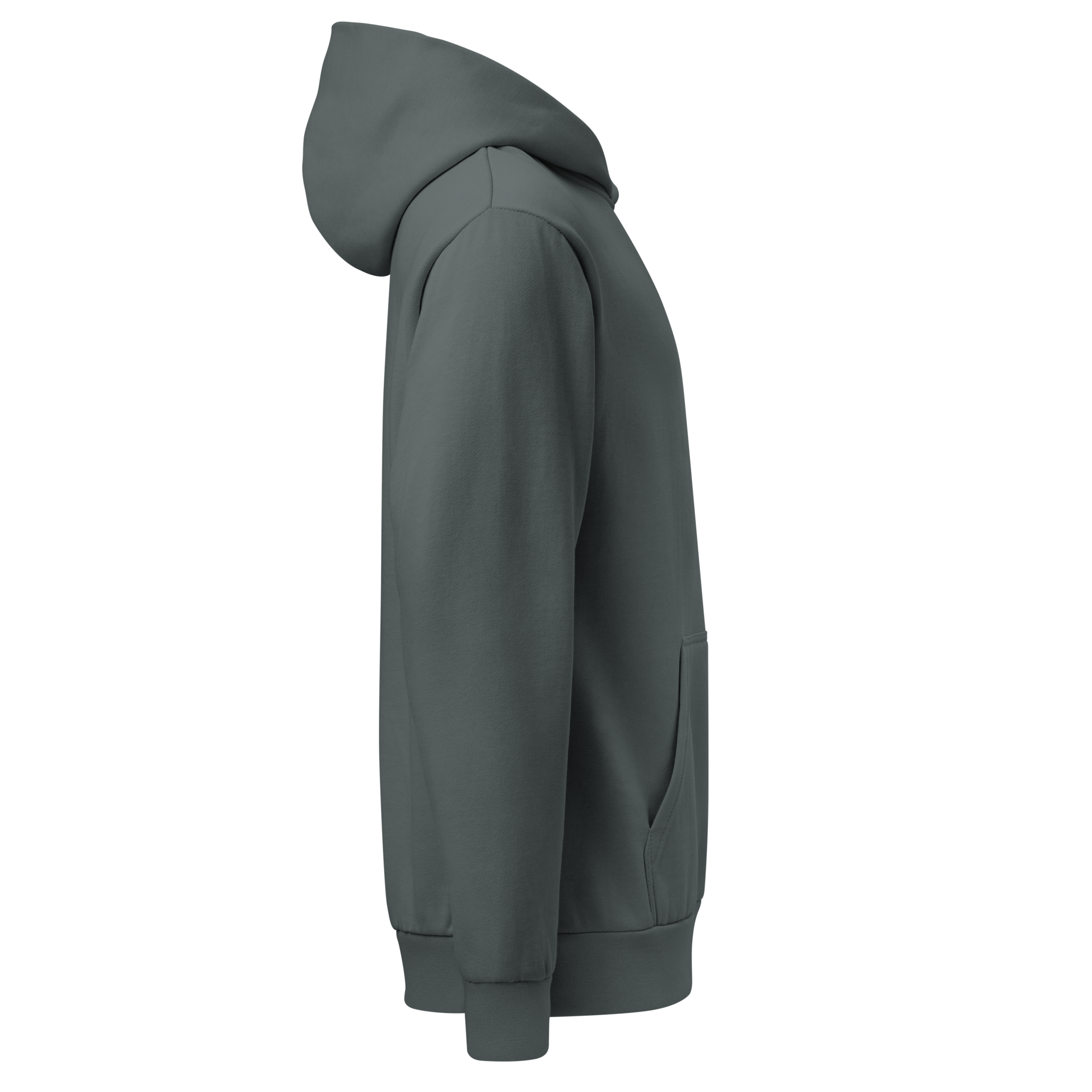

Marked with the Two-Legged Snake embroidery, recognisable to those who know, invisible to those who don’t.
• 80% cotton, 20% recycled polyester
• Heather Grey is 70% cotton, 30% recycled polyester
• Heavyweight fabric: 10 oz./yd² (340 g/m²)
• Oversized fit
• Two-panel hood, no drawcords
• Front kangaroo pocket
• Ribbed cuffs and waistband
• Blank product sourced from Pakistan
This product is made especially for you as soon as you place an order, which is why it takes us a bit longer to deliver it to you. Making products on demand instead of in bulk helps reduce overproduction, so thank you for making thoughtful purchasing decisions!
Our Recommendations
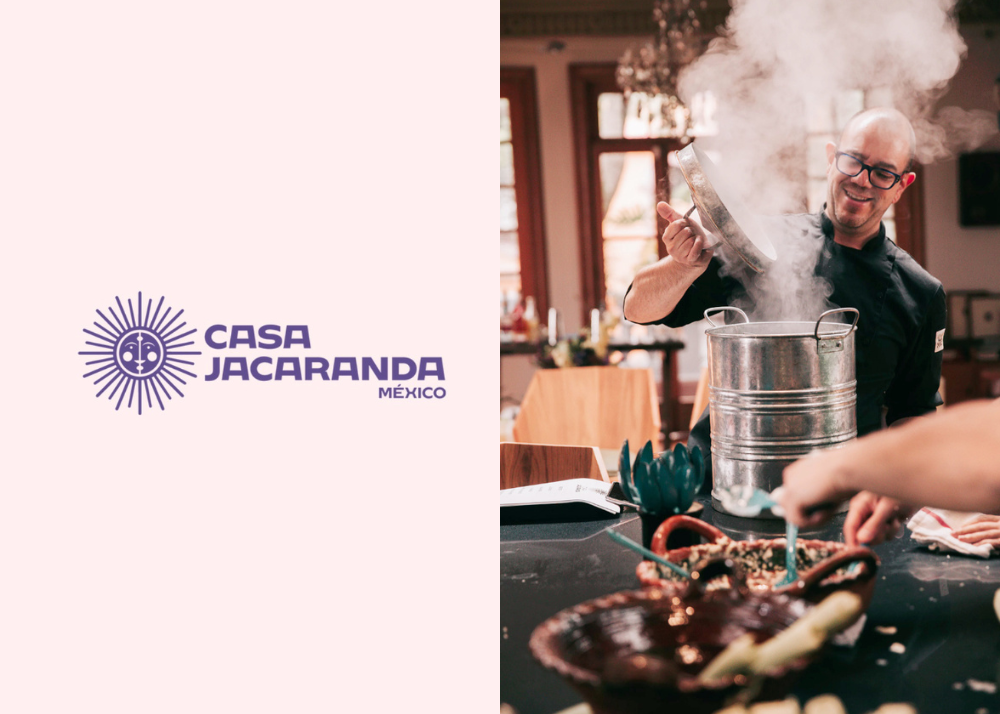
Premier Mexican traditional cooking experience in CDMX.
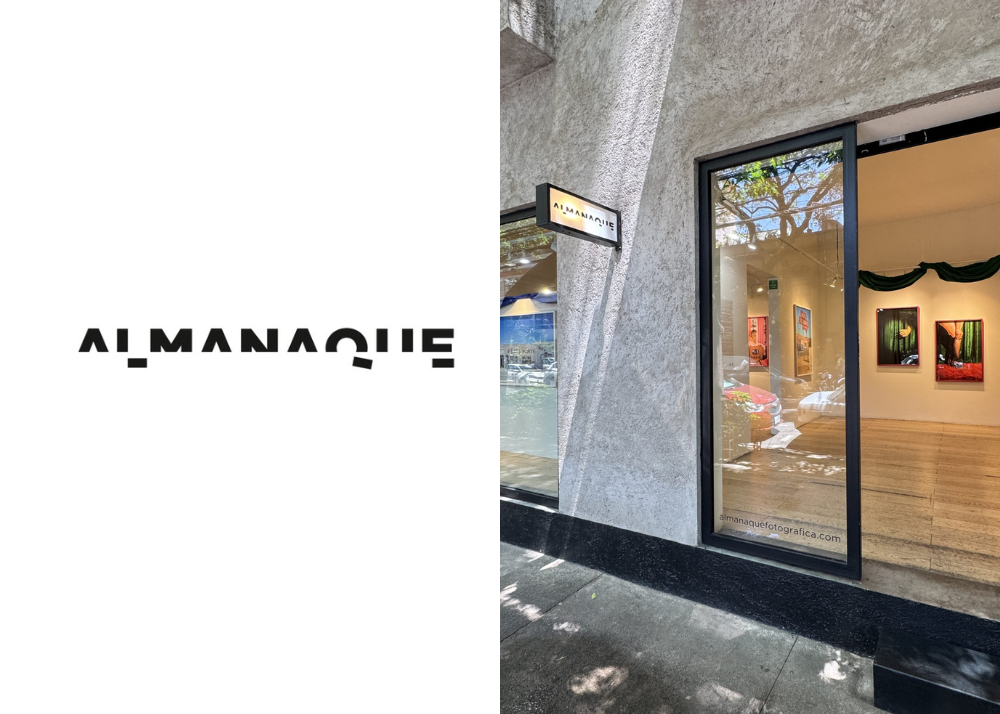
Contemporary art gallery specializing in photography. Roma Norte.

Pilates reframed as a focused, multi-sensory practice. Roma Norte.